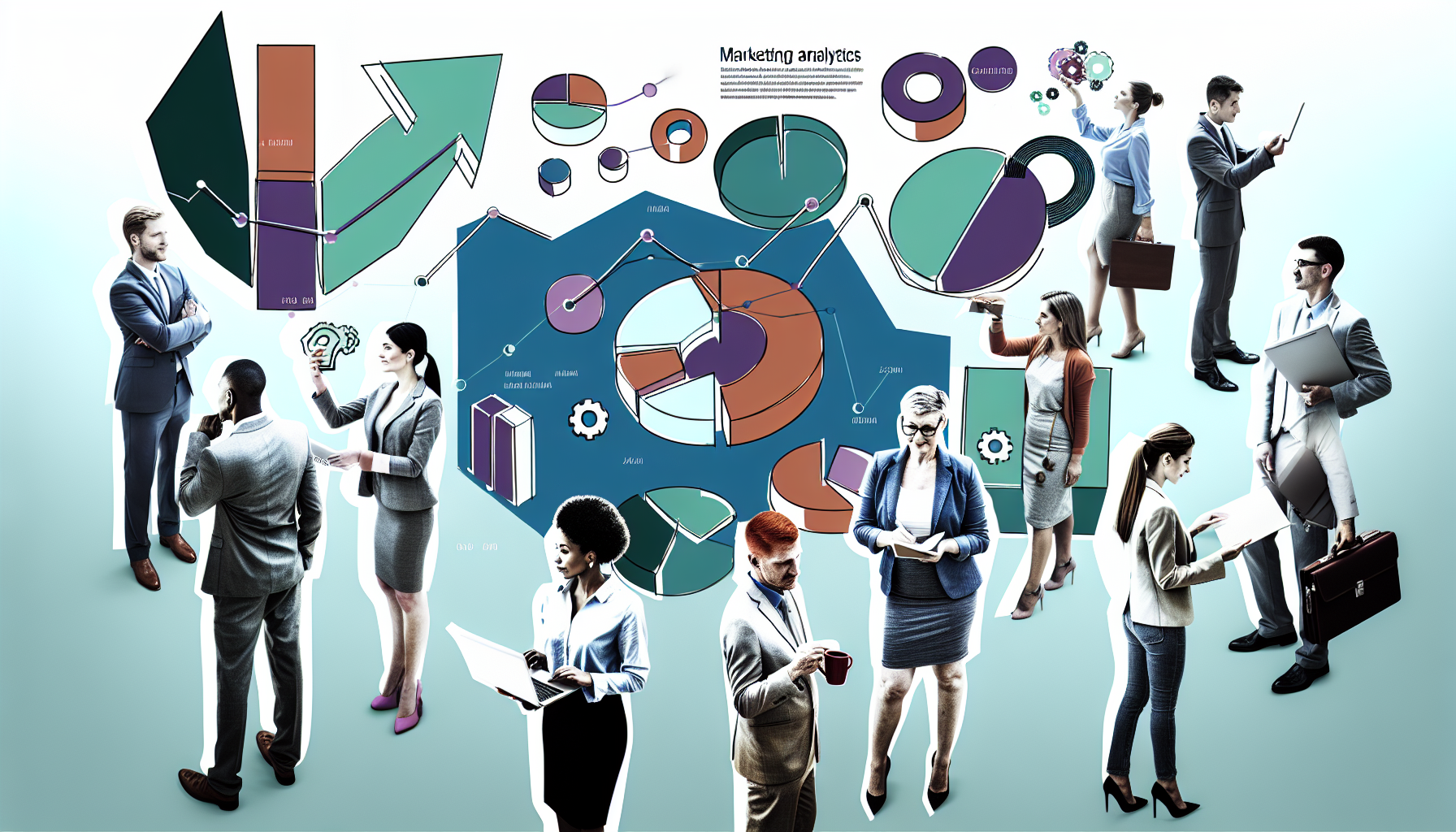
Navigating the Modern Landscape of Marketing Analytics: Turning Insight into Action
In today’s digital environment, data is no longer a competitive advantage by itself. Everyone has dashboards. Everyone has reports. What separates high performing organizations from the rest is their ability to turn insight into action quickly and repeatedly.
Marketing analytics has evolved from retrospective reporting into a decision making engine. The question is no longer “what happened?” but “what do we do next, and how fast can we move?”
Understanding that shift is where real growth begins.
Why Marketing Analytics Matters Now
Marketing analytics is the discipline of translating customer behavior, operational signals, and market dynamics into decisions that shape strategy and execution. When done well, it reduces uncertainty, accelerates learning cycles, and aligns teams around measurable outcomes.
Organizations that operationalize analytics consistently outperform those that treat data as a reporting function. The advantage comes from speed and clarity. Leaders see earlier, decide faster, and adjust before competitors even recognize a shift.
The value is not in perfect data. It is in actionable data.
The Current State of Marketing Analytics
As we move deeper into an AI enabled business environment, marketing analytics has shifted in three important ways.
First, analytics is increasingly predictive rather than descriptive. Modern platforms combine behavioral data, transaction history, and contextual signals to anticipate outcomes instead of simply recording them.
Second, analytics is becoming embedded directly into workflows. Insights no longer live in quarterly decks. They surface inside CRMs, campaign tools, ecommerce platforms, and customer support systems where decisions are actually made.
Third, AI is changing how insights are generated and consumed. Machine learning models now identify patterns humans would miss, while natural language interfaces allow non technical leaders to ask complex questions without needing an analyst in the room.
The organizations winning today are not the ones with the most advanced tools. They are the ones that have aligned analytics to decision authority.
Common Misconceptions and Persistent Challenges
A persistent misconception is that more data leads to better decisions. In practice, excess data often slows teams down, creates conflicting narratives, and obscures priorities.
Another challenge is fragmentation. Data still lives across marketing platforms, sales systems, customer service tools, and finance environments. When those systems do not speak to each other, analytics becomes a reconciliation exercise instead of a strategic asset.
The deeper issue is not technical. It is organizational. Analytics fails when ownership is unclear, when incentives are misaligned, or when insights are not trusted enough to drive action.
Building a Foundation That Actually Works
The goal is not a perfect single source of truth. The goal is a shared operating picture.
That starts with defining which decisions matter most and designing analytics backward from those decisions. Dashboards should exist to answer specific questions, not to display everything that can be measured.
Unified data environments help, but governance matters more. Teams need clear definitions, consistent metrics, and confidence that numbers mean the same thing across the organization.
When analytics is trusted, it gets used. When it gets used, it creates momentum.
Turning Insight into Action
Actionable analytics follows a disciplined pattern.
First, success must be defined clearly. Metrics only matter if they map directly to outcomes leadership actually cares about, such as revenue quality, customer lifetime value, retention, or operational efficiency.
Second, analytics must inform choices, not just performance reviews. Predictive models, scenario planning, and test and learn frameworks allow teams to adjust strategy in near real time rather than after the fact.
Third, personalization must be purposeful. Personalization driven by analytics should simplify the customer experience, not complicate it. The objective is relevance at scale, not novelty.
When analytics guides prioritization, resources move to where they create the most impact.
What Success Looks Like in Practice
High performing organizations treat marketing analytics as a command and control function rather than a reporting service.
They use analytics to allocate budget dynamically, identify friction points in the customer journey, and align marketing, sales, and operations around the same signals.
They measure fewer things, but they measure the right things relentlessly.
Most importantly, they close the loop. Insights lead to action. Action generates new data. The system learns and improves continuously.
The Strategic Imperative
Marketing analytics is no longer about proving value after the fact. It is about shaping decisions before outcomes are locked in.
Organizations that embrace this mindset gain more than efficiency. They gain adaptability. In an environment defined by rapid change, that adaptability becomes the real competitive advantage.
The future belongs to teams that do not just collect insights, but act on them decisively, consistently, and with intent.