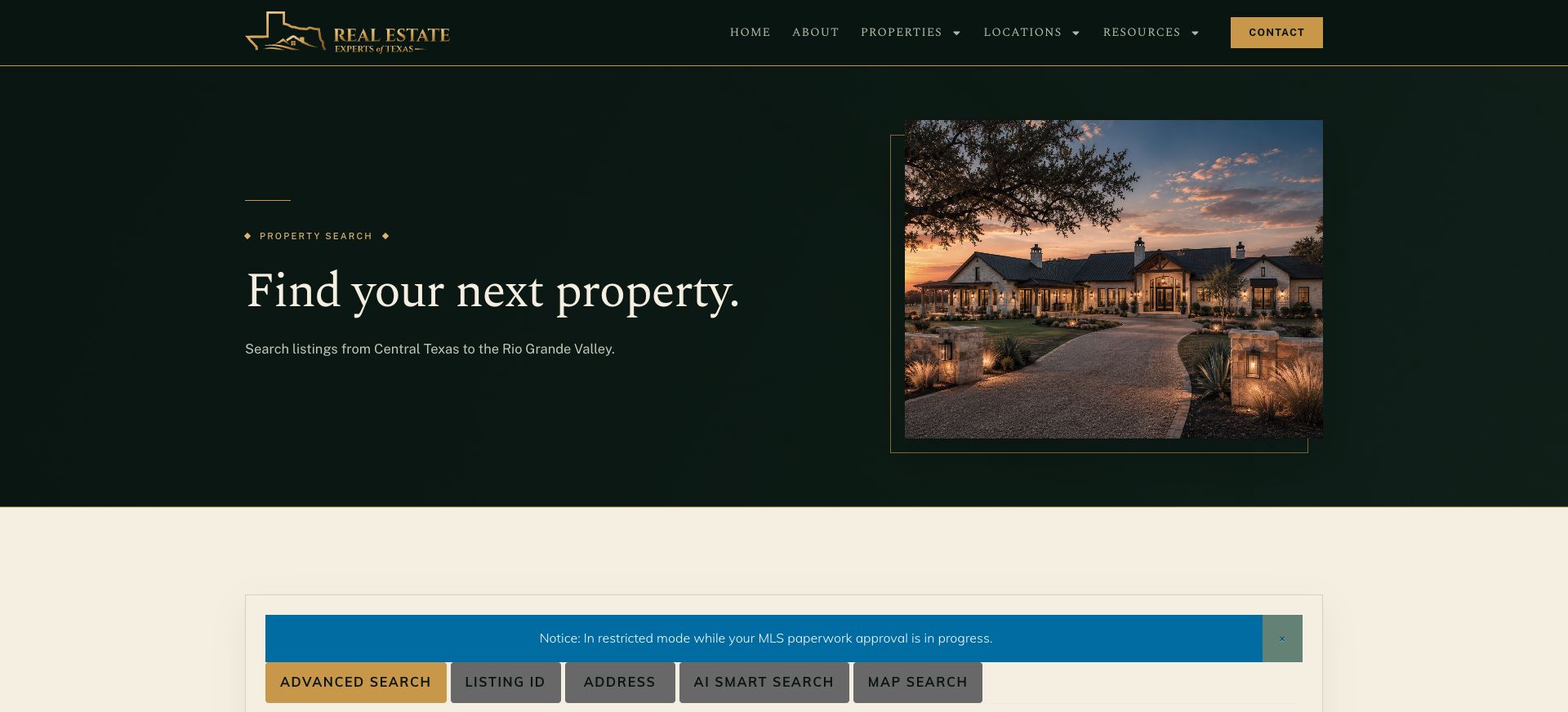
A property website with an integrated search experience
Real Estate Experts of Texas needed a website experience that could connect its own pages with IDX property search and listing information. The project record documents WordPress and Elementor work alongside IDX Broker integration. This case study focuses on that implementation and the checks recorded on October 27, 2026. That is a verification date, not a confirmed project launch date.
The implementation challenge
Property search introduces a different interface inside a brokerage website. Search forms, results and property details need to fit the surrounding design, and the amount of content changes as a visitor moves between them. A fixed-height embedded area can leave unnecessary space or make visitors scroll within a second scrolling panel.
The documented work addressed those interface boundaries while retaining the property-search provider and its controls. It did not replace the MLS feed or create new listing information.
Connecting the site and IDX content
The implementation used the WordPress wrapper to keep search and listing views within the site experience. The October verification record describes a shared height bridge that responds as embedded content changes. It checks the sending origin and frame source before accepting a height update.
The team also adjusted the search-page heading alignment, expanded the results area and adapted the result-card layout when no map is present. Static wrapper copies were saved for the provider's global, search, results and details contexts after dynamic wrapper refresh proved unreliable. This creates an ongoing maintenance requirement: future shared header or footer changes must also be reflected in those saved wrappers.
A consistent visual language
A separate styling pass brought the embedded interface closer to the site's design. The recorded changes include Public Sans for controls, Spectral for prices and result headings, an ivory, pine and gold palette, visible keyboard focus states, and form controls with a 48-pixel minimum height. On narrow layouts, search tools wrap into columns rather than extending beyond the page.
These are specific design and interface decisions. They are not evidence of a conversion-rate increase or a complete accessibility certification.
What the recorded checks establish
The verification notes cover desktop and mobile browser viewports, including 1440-by-1000 and 390-by-844 checks. The height bridge was active in the tested search and listing views, and opening a property detail preserved the parent listing-page context. No page-level horizontal overflow was found in those recorded checks. The styling record also confirms that the live stylesheet matched the approved local file.
The public homepage returned successfully during this case-study review and exposes navigation to property search, listings and buyer and seller resources. The review did not submit a lead form or independently verify a completed sale.
Results and remaining boundaries
The supported result is a documented design and integration implementation with responsive browser checks. The original verification notes still identify a restricted-mode MLS notice. A working preview or saved integration is not final MLS approval. Final MLS approval and a project launch date are not established by the records reviewed for this account. The case study does not assert either one.
No verified before-and-after traffic, lead, ranking or sales dataset has been attached to this case study. Those outcomes are therefore not claimed. Any later performance update will need client-approved reports tied to a defined reporting period.